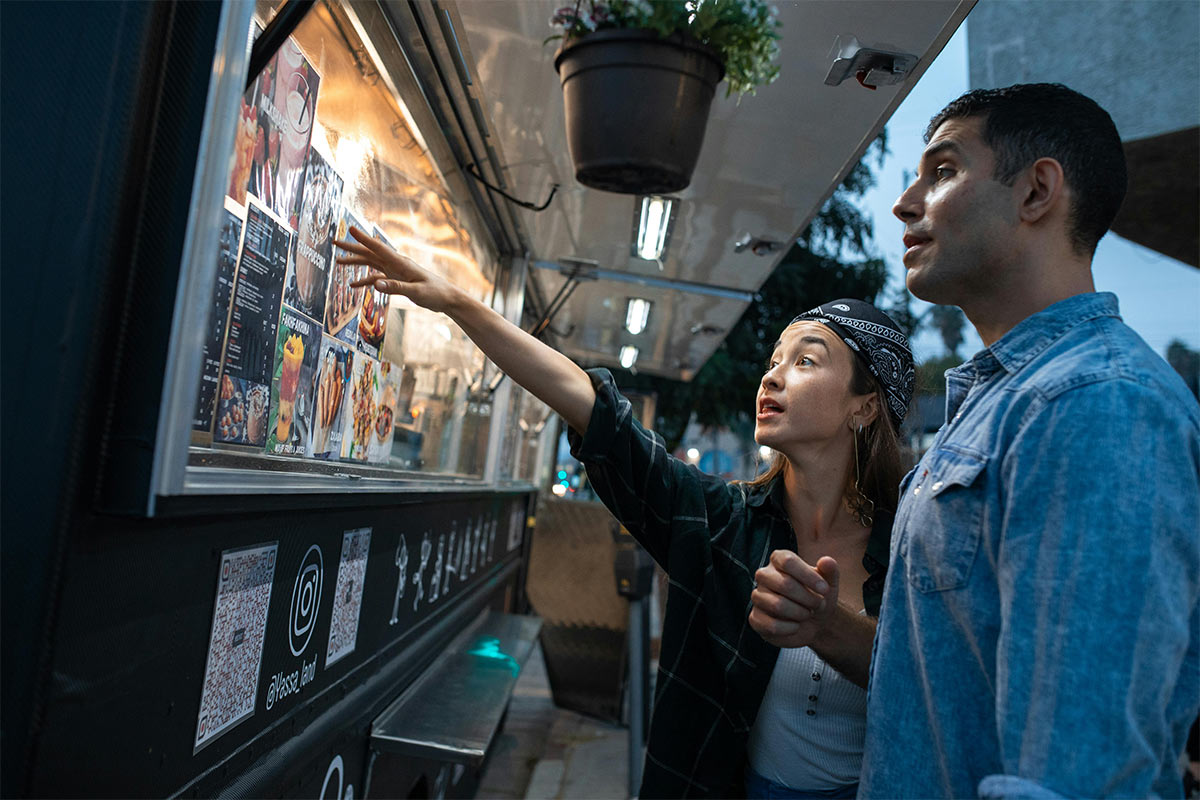
The fridge is open and nothing in it is food. Not literally — there's plenty in there. It just doesn't register as anything you want to put in your mouth.
So you check the pantry, which you already knew the contents of. Then the delivery app, where two hundred restaurants somehow contain zero acceptable dinners. Then the fridge again, in case it changed.
You're hungry. That much is clear. It's the rest of the question that's gone missing.
Why nothing sounds good
Usually it isn't the food.
You've run out of deciding. By evening you've made a few hundred small calls, a couple of hundred of them about food alone — one study of everyday eating put it around 220 a day, most of them so minor you don't notice. Your capacity for the next one is thin, and this one arrives with no obvious right answer.
You're too hungry to choose. There's a nasty loop here: low blood sugar makes complex thinking harder, choosing between fifteen restaurants is complex thinking, and every minute you don't decide you get hungrier and worse at it.
There are too many options. Barry Schwartz's work on the paradox of choice is the short version — past a certain point, more options make people less satisfied and slower to commit. Three dinners is a choice. Two hundred is a wall.
You don't know what you want, and you've misread that as nothing appealing. Those feel identical from the inside and they aren't. One is a preference. The other is an absence of one, which is much easier to solve.
Ten ways out
Roughly fastest first.
1. Let something else choose
The quickest fix is to stop trying. Hand the choice to a coin, a friend, or a restaurant wheel — anything that isn't your depleted brain.
The mechanism isn't magic. You're not getting a better dinner. You're getting a dinner, which beats the one you were going to spend another half hour not having.
The rule is one spin. Re-spinning until you like the answer is just deciding again, slower.
2. Put five minutes on the clock
Set a timer. When it goes, whatever looks least objectionable is dinner. No appeals.
The constraint does the work that willpower won't. You'd have taken forty minutes and arrived somewhere similar.
3. Eliminate instead of selecting
Your brain is much better at "no" than "yes" when it's tired. Use that.
Not Chinese, had it yesterday. Not pizza, too heavy. Not the expensive place, not tonight. Keep cutting until two or three things are left, then flip a coin between them. Going from twenty options to three is the hard part, and elimination does it almost effortlessly.
4. Ask about texture, not cuisine
"What cuisine do I want" is a bad question. It's abstract and you don't have an answer.
"What do I want it to feel like" is answerable:
- Crunchy — fried chicken, tempura, tacos
- Warm and soft — ramen, curry, soup, risotto
- Fresh and sharp — sushi, poke, salad, spring rolls
- Heavy and rich — burger, pasta, steak
Cravings tend to live in texture rather than nationality. Answer that and the cuisine falls out of it.
5. Go to the safe place
You have one. The reliable spot, the thing you've eaten forty times and never regretted.
There's no prize for adventurousness on a Wednesday. When you've got nothing, the known-good option is not a failure of imagination — it's the correct call.
6. Check whether you're actually thirsty, or just too far gone
Two physical things masquerade as indecision.
Thirst reads a lot like hunger. Drink a glass of water and give it ten minutes before you decide anything.
And if you've gone past hungry into properly depleted, eat something immediately — a banana, some nuts, whatever's within reach — then choose the real meal once your brain is back online. Deciding at that point is like doing arithmetic drunk.
7. Ask what you haven't eaten
Sometimes the body is asking for something specific and you're hearing static.
Had any protein today? Any vegetables at all? Skipped carbs entirely and now nothing satisfies? Run down the list. It often surfaces the answer immediately, because the craving was there — it just wasn't labelled.
8. Make it someone else's problem
Text a friend: "Thai or Mexican?" They'll answer instantly, because they're not the one who's been staring at the fridge.
Half the time their answer isn't what you go with. Hearing "Thai" is enough to produce a firm sense that you want Mexican, which is more than you had a minute ago. Either way you've got a decision.
9. Halve it, then halve it again
One impossible question becomes four easy ones.
Cook or order? Order. Asian or not? Asian. Chinese or Japanese? Japanese. Sushi or ramen? Ramen.
Nothing in that chain is hard. Binary questions barely register as decisions, and four of them will land you somewhere specific. A yes/no wheel works fine as the tiebreaker if you stall on one.
10. Set up a rotation and stop deciding entirely
Pick five reliable places. Assign them to weeknights. Follow it.
Monday Thai, Tuesday burgers, Wednesday Mexican, and so on. Dull, and that's rather the point — you know what dinner is before you're hungry enough to care. Break it whenever something genuinely appeals. The rotation is a floor, not a cage.
When it's not really about food
Stress. It flattens appetite and makes everything look unappealing. Eat anyway, something decent, even without enthusiasm. Fuel isn't contingent on being excited about it.
Taste fatigue. Eat the same six things long enough and your brain stops responding to any of them. The fix is novelty — deliberately pick a cuisine you almost never have.
Groups make it worse
Four indecisive people don't average out. They multiply.
Ban the open question. "What do you want to eat?" guarantees "I don't know, what do you want?" forever. Offer two options instead. A choice between things is answerable; a blank field isn't.
Use vetoes. Everyone strikes one thing. Four vetoes turns twenty options into a handful, and nobody had to advocate for anything — which is the part people are avoiding.
Put everyone's pick on a wheel. One suggestion each, spin once, go. Everybody's represented, nobody chose, so nobody's holding the bag if it's mediocre. Agree to honour it before you spin, or you'll be doing this again in five minutes.
The part that actually matters
Whichever of these you use, the last step is the same: commit.
Second-guessing costs you everything the decision just bought. You're not going to find perfect here — perfect wasn't on the menu tonight. You're going to find adequate, and adequate, eaten, comprehensively beats excellent, theorised.
What you eat on a random Tuesday will not echo through your life. It's dinner. The stakes are one meal.
If you want the wider version of this argument, we wrote about which decisions deserve your attention and which are quietly robbing you.
Otherwise, if you've read this far while still not eating: spin the wheel and go.